Lesson 94: Understanding Animal-Based Ingredients in Natural Dog Chews

Understanding Animal-Based Ingredients in Natural Dog Chews
Have you ever looked at your dog's favorite natural chew and wondered exactly what it's made from?
From beef cheek and bully sticks to chicken feet, trachea, and beef liver, natural animal-based chews come from a variety of tissues and body parts. Each ingredient has its own characteristics, including texture, composition, nutritional profile, and chewing experience.
Understanding where these ingredients come from can help you make more informed decisions about what you offer your dog.
At Chewsy Academy, we believe that knowing what's behind the label is an important part of responsible dog parenting. Let's explore some of the most common animal-based ingredients found in natural dog chews.
1. Muscle Meat and Connective Tissue
Muscle tissue and connective tissues are used in many popular natural dog chews. These ingredients can provide protein and a range of chewing textures.
Common examples include:
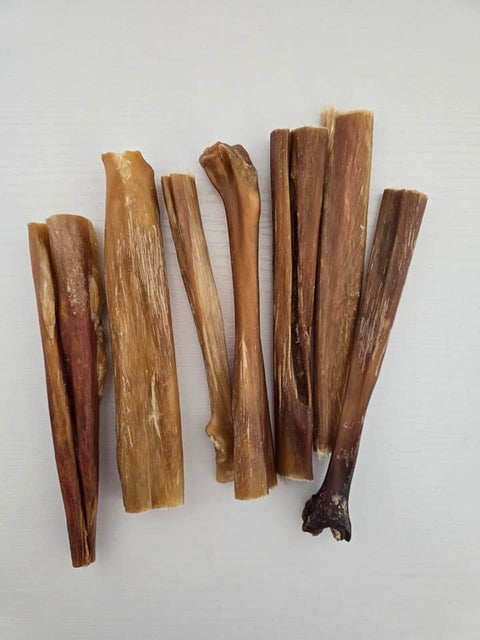
- Bully sticks: Typically made from beef pizzle, which is the penis of a bull or steer. They are a popular edible chew with a firm, chewy texture.
- Beef tendons: Tendons are connective tissues that attach muscles to bones. They contain collagen and provide a different chewing texture from muscle meat.
- Beef backstrap: Often made from muscle tissue along the animal's back, backstrap products can vary in texture depending on how they are prepared.
- Gullet products: Beef gullet comes from the esophagus and contains muscle and connective tissue.
These ingredients are not nutritionally identical. Their protein, fat, moisture, and calorie content can vary based on the source tissue and processing method.
What to consider: Look at the product's ingredient information, texture, size, and feeding guidance. Don't assume that all protein-rich chews have the same nutritional value or are suitable for every dog.
2. Skin and Collagen-Rich Tissues
Skin and collagen-rich tissues are used to create several types of natural chews.
Collagen is a structural protein found throughout an animal's connective tissues, including skin, tendons, and ligaments.
Common examples include:
- Beef cheek: Made from the cheek muscle and associated tissues. It is often prepared as rolls or strips and can provide a firm, textured chewing experience.
- Collagen sticks: Typically made from processed animal connective tissue rich in collagen. The exact source and preparation can vary by manufacturer.
- Other skin-based chews: Animal skin can be processed into different shapes and textures, depending on the product.
Collagen-containing products can differ considerably in firmness, digestibility, and nutritional composition. The word collagen alone does not tell you how hard a product will be or whether it is appropriate for your dog.
What to consider: Check the specific animal source, processing information, and product texture. Avoid excessively hard products that could fracture teeth, and supervise your dog throughout the session.
3. Ears and Cartilage
Animal ears are popular natural chews because they offer a different texture from many muscle-based products.
Depending on the animal and how the product is prepared, an ear may contain skin, connective tissue, and cartilage.
Common examples include:
- Cow ears
- Pig ears
- Lamb ears
Cartilage is a type of connective tissue that provides structural support in the body. It differs from bone in its composition and physical characteristics.
Ears can vary in thickness, firmness, fat content, and size. Pig ears, for example, may have a different fat content from other ear products.
What to consider: Check the product's nutritional information when available, especially if your dog has weight-management or dietary concerns. Choose an appropriate size, supervise chewing, and remove the product if it becomes small enough to swallow whole or develops unsafe pieces.
4. Feet and Other Bone-Containing Chews
Animal feet contain several types of tissue, which makes them different from a chew made primarily from muscle or skin.
Chicken feet, for example, contain:
- Skin
- Connective tissue
- Cartilage
- Small bones
Their nutritional composition and texture depend on the preparation method. A dehydrated chicken foot is not the same product as a raw or cooked foot.
Other animal parts may also contain bone or bone fragments. These products require particular care because bone-containing chews can pose risks, including tooth fractures, choking, digestive injury, and obstruction.
What to consider: Do not assume that a natural or dehydrated bone-containing product is automatically safe. Ask your veterinarian whether it is appropriate for your dog, particularly if your dog chews aggressively, has dental concerns, or tends to swallow pieces.
Avoid cooked bones, and remember that even products marketed specifically for dogs can carry risks.
5. Organs: Nutrient-Rich Ingredients
Organ meats are used in many dog treats and meal toppers. They can provide a variety of naturally occurring nutrients, but their nutritional profiles differ from those of muscle meat and connective tissues.
Common examples include:
- Beef lung: A relatively light-textured organ ingredient commonly used in treats and training rewards.
- Beef liver: A nutrient-dense organ that contains protein and naturally occurring vitamins and minerals.
- Other organ ingredients: Depending on the product, these may include heart, kidney, spleen, or other animal organs.
Organ ingredients can be nutritious, but more is not automatically better. Liver, for example, is particularly rich in certain nutrients, including vitamin A. Large or frequent amounts may be inappropriate as an addition to some dogs' diets.
What to consider: Check portion guidance and calorie information. Organ treats and toppers should fit into your dog's overall nutritional plan rather than replace a complete and balanced diet.
If your dog follows a prescription diet or has a medical condition, ask your veterinarian before adding organ-based products.
6. Other Animal Parts Used in Natural Chews
Some natural chews come from animal structures that may be less familiar to dog parents.
Here are a few examples:
Trachea: The trachea is the windpipe. It contains cartilage rings and other connective tissues. Trachea products are often hollow or tubular, but their size, firmness, and structure vary.
Bladder: Animal bladder tissue can be cleaned and processed into edible chew products. The texture and nutritional characteristics depend on the animal source and preparation.
Gullet: Gullet products come from the esophagus and contain muscle and connective tissue. They may be prepared in different shapes and textures.
What to consider: The name of an animal part doesn't tell you everything about the finished product. Processing, thickness, shape, size, and preparation all influence the final chew. Read the product information and supervise your dog rather than assuming every product from the same body part behaves the same way.
7. Why Understanding Ingredients Matters
Different animal tissues have different nutritional profiles and physical characteristics.
Knowing what a chew is made from can help you think through several important questions.
Texture and chewing experience
Some products are flexible and chewy, while others are firmer or more brittle. These differences influence how a dog interacts with the chew.
However, appearance alone isn't a reliable way to judge hardness or safety. Very hard chews can fracture teeth, and a chew that breaks into sharp pieces may create additional hazards.
Nutritional composition
Muscle tissue, organs, skin, cartilage, and other animal tissues do not have identical nutritional profiles.
Protein, fat, calories, moisture, and naturally occurring nutrients can vary considerably. If you're managing your dog's weight or diet, look for nutritional information rather than relying on ingredient names alone.
Allergies and food sensitivities
Knowing the animal source is particularly useful for dogs with food sensitivities or allergies.
A single-ingredient product may make the ingredient list easier to understand, but it does not automatically mean the product is hypoallergenic. Dogs can react to individual animal proteins.
If your dog has known allergies or follows an elimination or prescription diet, consult your veterinarian before introducing new animal-based ingredients.
Individual safety and suitability
The ingredient is only one part of the decision.
Your dog's size, age, chewing style, dental health, swallowing habits, and medical needs all matter. Even a high-quality product may be unsuitable for a particular dog.
Always supervise chewing, remove products that become small enough to swallow whole or develop hazardous pieces, and avoid excessively hard chews.
8. How to Become a More Informed Ingredient Detective
The next time you shop for a natural dog chew, look beyond the product name.
Try this simple checklist:
1. Identify the animal source. Is it beef, pork, chicken, lamb, or another animal?
2. Identify the body part. Is it muscle, skin, connective tissue, cartilage, organ, or bone-containing tissue?
3. Read the ingredient list. Does the label clearly explain what the product contains?
4. Check nutritional information. Look for calories, fat, protein, and feeding recommendations when available.
5. Ask about processing and sourcing. Contact the manufacturer or seller if important information is missing.
6. Consider your dog. Does the product fit your dog's chewing style, dental health, dietary needs, and size?
7. Supervise the experience. Observe how your dog handles the chew and remove it when it becomes unsafe.
Being informed doesn't mean you need to memorize every animal part. It means knowing where to look for answers and asking questions when something isn't clear.
Pixie's Homework: What's Behind Your Dog's Favorite Chew?
Choose one of your dog's favorite natural chews.
Take a closer look at the packaging and product information.
- Which animal does it come from?
- Which part of the animal is used?
- Is it primarily muscle, connective tissue, skin, cartilage, organ, or bone-containing tissue?
- What can you learn about its texture and nutritional characteristics?
- Are there any safety or feeding recommendations you hadn't noticed before?
You may be surprised by how much you can learn about something your dog enjoys every day!
The Chewsy Academy Takeaway
Understanding what's behind the chew helps you become a more informed dog parent.
Natural dog chews come from many different animal tissues, and those ingredients have their own nutritional profiles, textures, and chewing characteristics.
Learn to identify the ingredients, understand the product information, and consider how each option fits your dog's individual needs.
Remember, animal-based doesn't automatically mean appropriate for every dog. Quality, ingredients, nutrition, hardness, size, and supervision all matter.
The more you understand what's behind the label, the more thoughtfully you can choose.
Back to the basics. Better chewing. Happier dogs.
Chewsy Academy educational note: This article is for general educational purposes and is not a substitute for veterinary advice. Consult your veterinarian about food allergies, dietary restrictions, dental health, or whether a particular animal-based chew is appropriate for your dog.