Lesson 79: How to Make Your Dog's Chew More Engaging

How to Make Your Dog's Chew More Engaging
Does your dog always need a brand-new chew to stay interested? Not necessarily! Sometimes, changing how you present an appropriate chew can make the experience more engaging without adding another item to your collection.
Enrichment is about more than the object itself. It also includes the opportunities dogs have to sniff, explore, make choices, and interact with their surroundings.
With a little creativity, you can bring variety to your dog's chewing routine while keeping safety and individual preferences at the center.
1. Rotate Appropriate Chews
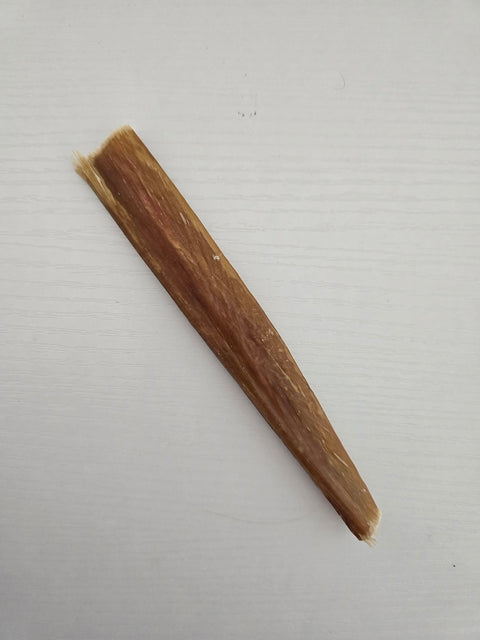
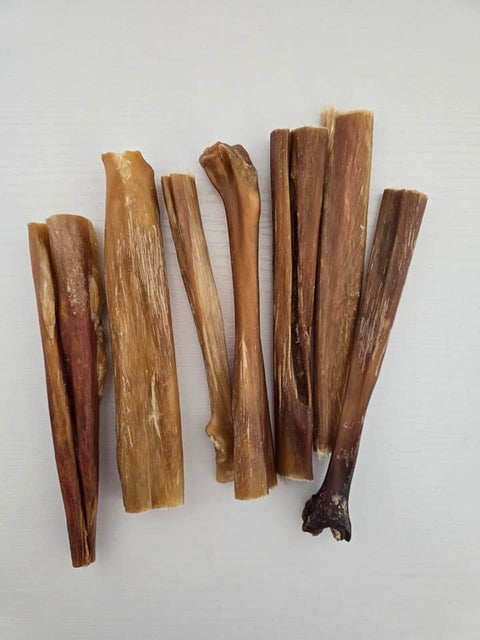
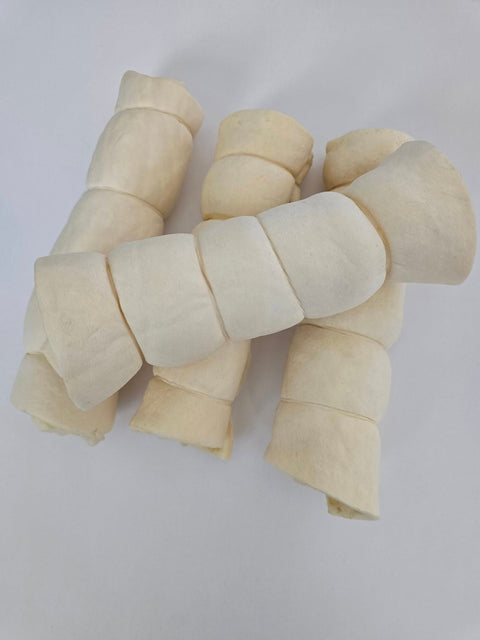
Offering different suitable chews over time can add variety to your dog's routine. Different shapes, textures, and chewing experiences may appeal to different dogs, although not every dog will enjoy every option.
A simple chew rotation might include a few appropriate options that your dog already tolerates. Rather than offering everything at once, choose an option that fits the occasion and your dog's current needs.
When planning a rotation, consider:
-
Chewing style: Gentle chewers and dogs who bite down forcefully may need different options.
-
Size and shape: Choose a chew that suits your dog's size and cannot easily be swallowed whole.
-
Dental health: Avoid excessively hard chews that may fracture teeth. Ask your veterinarian for guidance if your dog has dental concerns.
-
Dietary needs: Account for ingredients, allergies, sensitivities, and extra calories.
-
Individual preference: Notice which options your dog engages with comfortably.
Rotation doesn't mean you need to purchase more and more chews. You can rotate among suitable options you already have, provided each item remains in good condition and is appropriate for your dog.
Always supervise chewing. Remove a chew if it becomes small enough to swallow whole, develops sharp or hazardous pieces, or otherwise becomes unsafe. No chew is completely risk-free.
2. Add Food Enrichment Carefully
Food enrichment can add another layer of interest by encouraging dogs to sniff, lick, and explore a tasty reward.
A purpose-designed stuffable dog toy is generally a more predictable choice for this activity than a natural chew that was not specifically designed to hold food.
You can try a small amount of your dog's regular wet food or another dog-safe filling they already tolerate. Keep portions modest, account for the extra calories, and introduce unfamiliar foods gradually.
What About Hollow Natural Chews?
Some natural products, such as trachea tubes or hollow cow hooves, may look convenient for holding a filling. However, a hollow shape does not automatically make a chew safe for stuffing.
Cow hooves are very hard and can pose a tooth-fracture risk. Natural chews can also soften, break, or develop sharp pieces during use. Trachea products vary in size, structure, and suitability, so their condition and intended use matter.
For these reasons, don't assume that every hoof or trachea tube is appropriate for food enrichment. Check product guidance and choose an alternative if the item isn't clearly suitable. Avoid using hard bones, including femur bones, as a stuffing activity; bones carry meaningful risks of tooth fractures and other injuries.
Whichever option you choose, supervise the entire activity and remove any item that becomes damaged or unsafe. If your dog has dental problems, tends to swallow large pieces, or has special dietary needs, ask your veterinarian for advice.
3. Turn Chew Time Into a Treasure Hunt
Dogs use their noses to investigate the world, so a simple search can make the lead-up to chew time more engaging.
Instead of handing over a suitable chew immediately, you could invite your dog to find it in an easy, safe location.
Here's how to get started:
-
Choose a safe spot. Pick a clear area where your dog won't encounter small objects, hazards, or other pets competing for the item.
-
Keep the first search easy. Place the chew where your dog can find it without climbing, jumping, or squeezing into a tight space.
-
Encourage sniffing. Give your dog time to investigate and discover the item at their own pace.
-
Supervise the chewing session. Once your dog finds the chew, stay nearby and monitor how they use it.
-
Adjust to your dog. If searching seems frustrating or confusing, make the next round simpler.
Use only an appropriate chew, and don't hide it somewhere that could cause your dog to swallow it hastily, guard it in a stressful setting, or chew without supervision.
If your dog is uncomfortable with searching games or becomes possessive around valued items, skip the treasure hunt and choose a different enrichment activity.
Make the Experience More Interesting—Not More Difficult
Enrichment doesn't have to involve complicated puzzles or increasingly challenging tasks. The goal is to offer a safe and rewarding experience, not to make your dog work harder for the sake of it.
Pay attention to your dog's response. Are they curious? Do they explore comfortably? Do they settle into the activity? Or do they seem frustrated, worried, or uninterested?
Use those observations to decide what to repeat, simplify, or change. A familiar chew offered in a calm environment may be more enjoyable than a new activity that doesn't suit your dog.
Remember, chewing is only one part of a balanced enrichment routine. Sniffing walks, play, training, exploration, social interaction, physical exercise, and rest all contribute in different ways to your dog's daily life.
Pixie's Homework: Try One New Twist
Choose one safe way to make your dog's next chew session more engaging.
You could rotate to another suitable chew, offer an appropriate chew after a simple sniffing game, or use a purpose-designed stuffable toy with a small amount of familiar food.
Observe how your dog responds:
-
Did they seem interested in the new presentation?
-
Did they explore at a comfortable pace?
-
Was the activity suitable for their chewing style?
-
Would they enjoy the same experience again?
You don't need to change everything at once. One small adjustment can help you learn more about what your dog enjoys.
Chewsy Academy Takeaway
It's not always about finding a new chew. It's about making the experience more enriching!
Thoughtful rotation, safe scent games, and suitable food enrichment can add variety to your dog's routine. Choose activities that fit your dog's individual needs, supervise chewing, and inspect every chew for damage.
The best enrichment is not necessarily the newest or most complicated. It's the activity your dog can enjoy safely and comfortably.
Chewsy Academy provides general educational information and is not a substitute for individualized veterinary or qualified behavior-professional advice.