Lesson 78: Stuffable Chews and Food Enrichment for Dogs

Stuffable Chews and Food Enrichment for Dogs
What if snack time could become more than just eating? With food enrichment, you can give your dog an opportunity to sniff, lick, explore, and work toward a tasty reward.
Food enrichment involves presenting food in a way that encourages dogs to engage with their senses and natural foraging behaviors. It can add variety to a daily routine, provide mental stimulation, and make a familiar meal more interesting.
You don't need an elaborate setup. A dog-safe stuffable toy, a familiar food, and a little preparation can be enough to get started.
What Is Food Enrichment?
Food enrichment means changing how your dog accesses or explores their food. Instead of simply serving a meal in a bowl, you might use a food puzzle, scatter-feed their kibble in a safe area, or offer a suitable stuffable toy.
These activities can encourage dogs to investigate, lick, sniff, and problem-solve. Some dogs enjoy working steadily at a food toy, while others prefer simple searches or easy-to-access fillings.
The goal is not to make eating difficult. It's to offer a safe, rewarding activity that suits your dog's abilities and preferences.
What Can You Use as a Filling?
Start with foods your dog already tolerates. Familiar ingredients make it easier to monitor how your dog responds, especially when trying a new enrichment activity.
Here are some options that may work for many dogs:
-
Plain pumpkin purée: Choose plain pumpkin, not pumpkin pie filling, which may contain added sugar, spices, or other ingredients.
-
Your dog's regular wet food: A convenient way to turn part of a familiar meal into an enrichment activity.
-
Plain, unsweetened yogurt: Only if your dog tolerates dairy; some dogs experience digestive upset from lactose.
-
Mashed banana: Offer a small amount as an occasional addition rather than a large serving.
-
A little of your dog's usual meal topper: Check the ingredient list and use a product suitable for your dog's diet.
-
Pet-safe peanut butter: Choose a product without xylitol, also known as birch sugar, which is toxic to dogs. Check the full ingredient list every time.
Not every ingredient suits every dog. Food allergies, sensitivities, medical conditions, and veterinary-prescribed diets may limit what you can use. When in doubt, choose your dog's regular food or ask your veterinarian about suitable alternatives.
Introduce unfamiliar foods in small amounts and watch for digestive upset or other unusual reactions. Keep portions modest, and account for enrichment fillings in your dog's overall daily calorie intake.
Which Toys and Chews Can Be Stuffed?
There are two important categories to understand: purpose-designed stuffable toys and natural animal chews that have a hollow or suitable structure.
A toy specifically designed for stuffing is generally the more predictable option because it is manufactured for that purpose. Choose the correct size and type for your dog, follow the manufacturer's instructions, and inspect it regularly for damage.
Some natural chews may have cavities or shapes that can hold a small amount of filling. However, a natural chew is not automatically safe to stuff just because it is hollow or has an opening.
Hollow Cow Hooves
Some people use hollow cow hooves for food enrichment, but hooves are very hard and may pose a tooth-fracture risk. They can also splinter or develop sharp edges. For these reasons, they are not an ideal default choice, particularly for dogs who bite down forcefully or have dental concerns.
Consider a purpose-designed stuffable toy instead, and ask your veterinarian about appropriate alternatives if your dog has a history of tooth damage.
Trachea Tubes
Trachea tubes have a naturally hollow structure, which may appear convenient for holding a small amount of filling. However, suitability depends on the product's condition, dimensions, and how your dog chews.
Choose only a product appropriate for your dog's size and chewing style. Supervise closely, and remove it if it softens, breaks apart, develops sharp pieces, or becomes small enough to swallow whole. Natural chews can present choking, swallowing, and other hazards.
Beef Bladder Sticks and Other Natural Chews
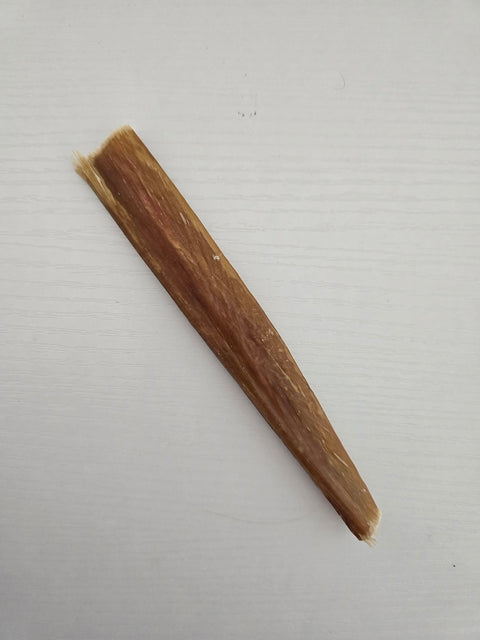
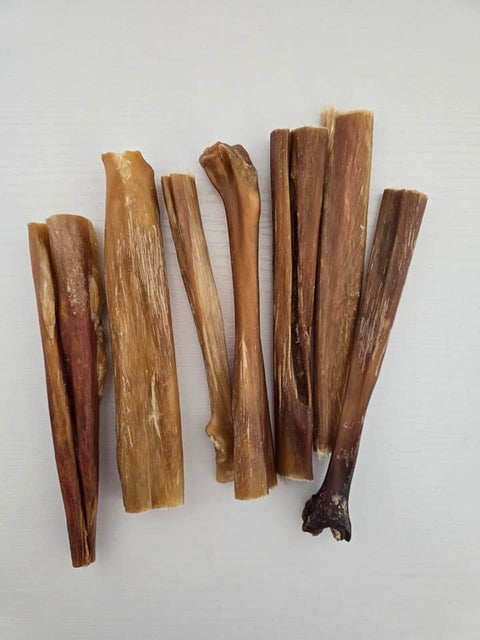
Some larger natural chews may have a shape that holds a little filling, but not every product is designed for stuffing. A chew can soften, tear, or break into pieces as your dog works on it.
Check the product's intended use and condition before adding food. If the chew isn't suitable for holding filling safely, use a purpose-designed toy instead.
What About Femur Bones?
Femur bones deserve particular caution. Bones can fracture teeth, break into hazardous pieces, cause choking or digestive injuries, and create other risks. A bone's size or apparent sturdiness does not guarantee safety.
Stuffing a femur bone does not remove these hazards. For food enrichment, a dog-specific stuffable toy is generally a more appropriate choice than a hard bone, especially for dogs who chew forcefully or have dental concerns.
Important: No natural chew is completely risk-free. If you are uncertain whether a product is suitable for your dog, consult your veterinarian before offering it.
How to Prepare a Simple Food-Enrichment Activity
Once you've chosen a suitable toy and filling, keep the first session easy.
-
Choose an appropriate item. Use a stuffable toy designed for your dog's size and chewing habits.
-
Start with a familiar filling. Your dog's regular wet food or a small amount of a known, tolerated food can be a good starting point.
-
Keep the challenge simple. Place a small amount near the opening so your dog can access it without becoming frustrated.
-
Supervise the activity. Stay nearby and watch how your dog interacts with the toy.
-
Inspect the item afterward. Remove damaged toys and discard any item that becomes unsafe.
-
Clean it thoroughly. Follow the manufacturer's cleaning instructions, especially when using moist or perishable foods.
Avoid adding so much filling that the activity becomes difficult or creates a large extra serving. If your dog becomes frustrated, simplify the setup or offer an easier enrichment option.
Should You Freeze a Stuffable Toy?
Some toys are designed to be filled and frozen, which can make the activity last longer. Only freeze a toy if the manufacturer says it is suitable for freezing, and follow its instructions.
A frozen filling can become firmer, so consider your dog's teeth, chewing style, and ability to access the food comfortably. Avoid making the activity so difficult that your dog bites forcefully at the toy or becomes distressed.
If your dog has dental problems, swallowing concerns, or a medical condition that affects feeding, ask your veterinarian whether this type of enrichment is appropriate.
Why Food Enrichment Can Be Valuable
When suited to the individual dog, food enrichment can provide several benefits:
-
Mental stimulation: Encourages investigation and problem-solving.
-
Foraging opportunities: Lets dogs use their noses and explore ways to access food.
-
Routine variety: Makes familiar food more interesting without requiring an entirely new activity.
-
A rewarding experience: Gives dogs an opportunity to engage at their own pace.
-
Flexible difficulty: Activities can often be made easier or more challenging based on a dog's experience and abilities.
Food enrichment is not a treatment for anxiety or behavior problems, and it will not meet every dog's needs on its own. It works best as one part of a balanced routine that includes physical activity, social interaction, rest, and other forms of enrichment.
Pixie's Homework: Try a Simple Food-Enrichment Activity
Choose a dog-safe stuffable toy and fill it with a small amount of a familiar food your dog tolerates. Start with an easy setup, supervise the entire session, and observe how your pup explores it.
Ask yourself:
-
Did your dog understand how to access the food?
-
Did they seem interested and comfortable?
-
Was the toy the right size and difficulty?
-
Did the activity fit naturally into their routine?
If your dog isn't interested in a stuffable toy, that's okay. Try a simple sniffing game or another safe enrichment activity instead. The goal is to discover what your individual dog enjoys.
Chewsy Academy Takeaway
Enrichment isn't just about keeping dogs busy. It's about giving them opportunities to think, explore, and engage their natural instincts.
Food enrichment can be as simple as a familiar filling in a suitable stuffable toy. Choose ingredients carefully, keep portions appropriate, supervise your dog, and inspect toys and chews for damage.
When it comes to natural chews, don't assume that hollow means safe to stuff. Prioritize your dog's dental health, chewing style, and overall safety—and choose a purpose-designed toy whenever a natural chew is not clearly suitable for the activity.
Chewsy Academy provides general educational information and is not a substitute for individualized veterinary advice.